
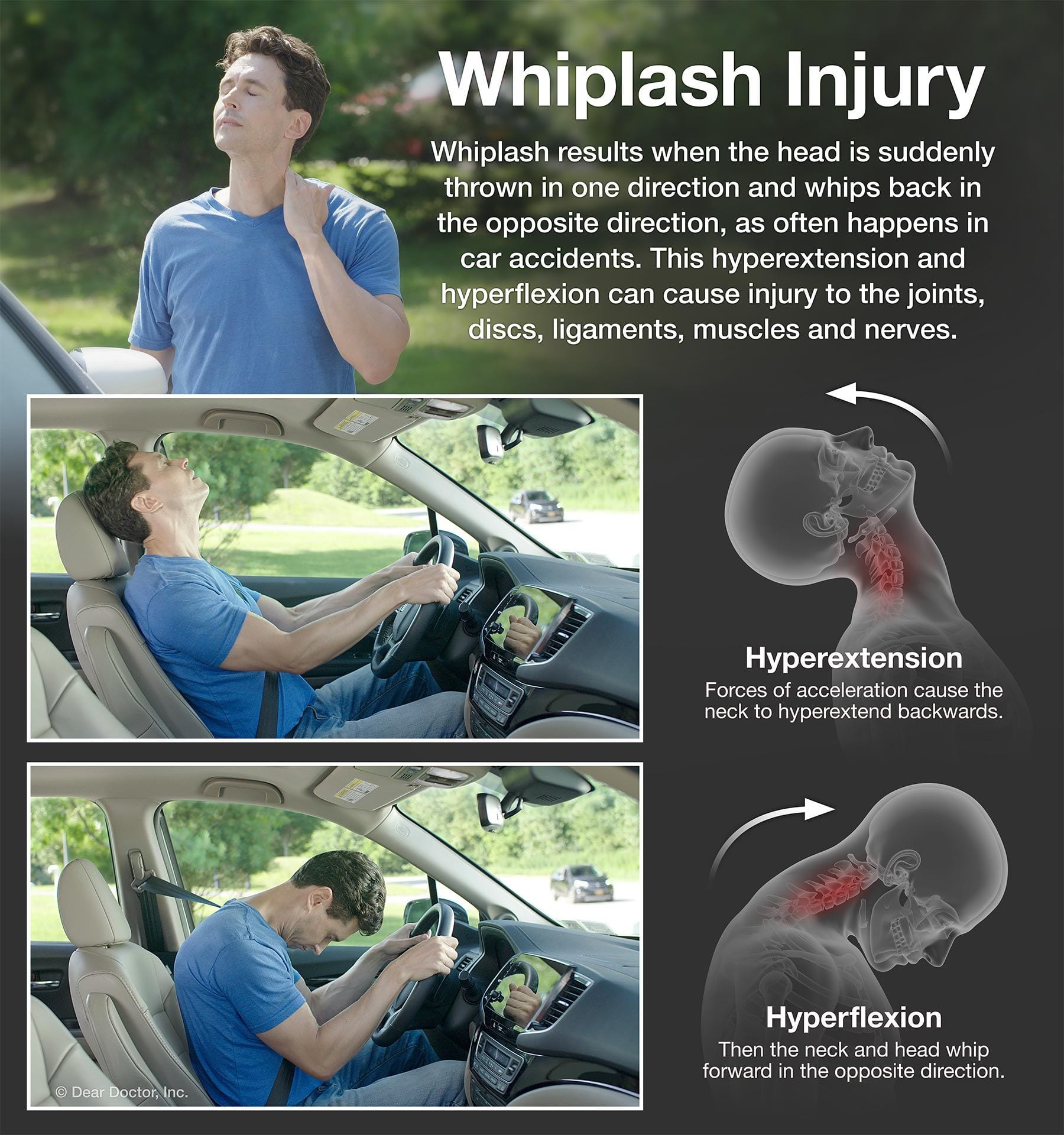
Whiplash happens when a sudden blow or action throws your head violently in one direction and then whips it back in the opposite direction. It may be the result of a car accident, from playing sports or even from a physical altercation. This hyperextension and hyperflexion can cause injury to your neck that can include your cervical (upper) spine, spinal discs, ligaments, muscles and nerves. It may even affect more than your neck.
There are an estimated one million cases of whiplash per year in the U.S. alone, and chiropractors treat a lot of these whiplash cases—we see it all too often.
Symptoms of Whiplash
If you feel a tightening in your neck and shoulders after an incident that snaps your head back and forward or from side to side, you may wonder if you have whiplash. You may feel symptoms right away, or not for a day or two. The type and extent of injuries that result from whiplash vary from person to person, but here are some possible symptoms:
- Severe neck pain
- Headaches, especially at the base of the skull
- Pain that spreads to the shoulders, arms, upper back and possibly the hands, fingers or chest
- Loss of ability to concentrate
- Numbness
- Stiffness and loss of range of motion
- Ringing in ears
- Irritability or fatigue
Whiplash can also cause dizziness, difficulty swallowing, nausea and blurred vision, though these symptoms tend to go away quickly. Recovery varies, but many people do recover fully, though some develop ongoing problems as a result of whiplash. You may be more likely to have chronic pain if you felt severe symptoms right after the incident. Chronic pain and injury can interfere with other structures such as the curvature of the neck. If your neck loses its natural curve, you are more prone to further injury as well as cervical arthritis and herniated discs. Prompt chiropractic treatment can head off some of these long-term conditions.
How Chiropractors Diagnose and Treat Whiplash
When you come to a chiropractor with a possible whiplash injury, if you did not seek medical attention after the accident, it will first be necessary to rule out a possible fracture by obtaining an x-ray. We will ask about your symptoms and palpate (feel) the neck to see if there is loss of mobility, injury to the joints between the vertebrae, or a muscle or ligament injury. We will also check for tenderness, stiffness and tightness and look at how well your spinal joints move. Chiropractors examine the whole spine, not just your neck, and look at your biomechanics—posture, alignment and how you walk and move—because whiplash accidents can cause serious injury to multiple areas of the body, not just to the neck.
After a whiplash injury, if you're experiencing tingling sensations in your arms or elsewhere or if severe trauma is suspected, it may be necessary to get an MRI that shows more about the injury. If whiplash is diagnosed and you are in the acute phase—soon after the incident—it will be important to reduce inflammation as quickly as possible. Chiropractors often perform gentle stretching or manipulations during the acute phase. If you have particularly tight muscles, a stronger touch will be used, but the stretches are very safe.
Chiropractors can also apply pressure on trigger points—sensitive areas that cause pain—to relieve muscle tightness. In addition, we may give you instructions about icing at home, which you should follow carefully. In some cases, a soft cervical collar may be recommended for a few days.

As the inflammation goes down and your neck starts to feel better, further adjustments or other chiropractic techniques can help restore mobility and range of motion. Your treatment plan may also include massage and an at-home exercise regimen to help shorten recovery.
Whiplash injuries are very individualized, and everyone heals differently. Chiropractors tailor the treatment to your specific situation, but over time, in most cases, the soreness and stiffness of whiplash dissipates. If you do have chronic pain, we will help you focus on what you can do and how to accommodate any loss of function. With time and chiropractic therapy, you can move past whiplash and get on the road to a healthier spine and a healthier you.